
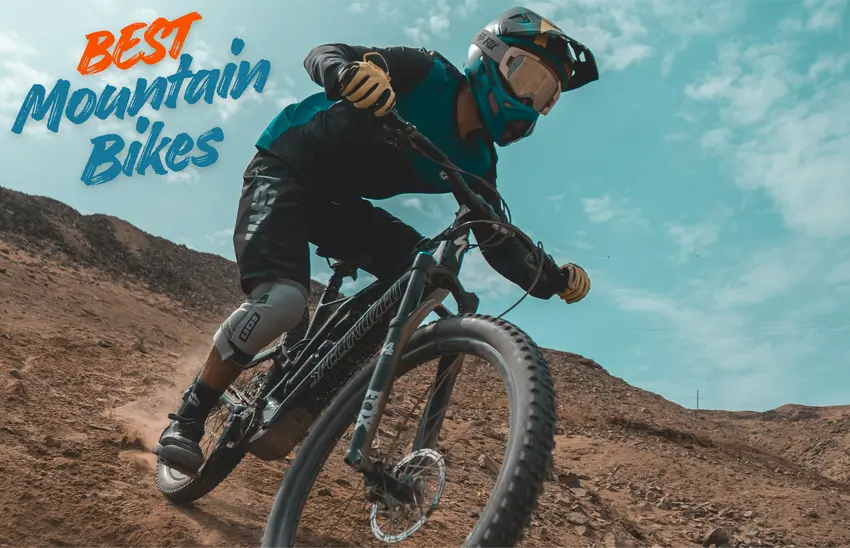
When choosing the best mountain bike, you’re making a significant investment that’s likely to last 5 to 10 years. That’s why you need to choose wisely!
If you’ve decided on a mountain bike as your next two-wheeled companion—whether as an upgrade or your introductory venture on the trails—our article will provide you with a carefully selected range of the 14 best mountain bikes available right now.
Our Selection of the Best Mountain Bikes
1. Orbea Alma M50
2. Santa Cruz Bicycles Chameleon AL D R
3. Salsa Rangefinder
4. Cannondale Trail 8
5. Salsa Beargrease
6. Scott Spark ST 910 TR
7. Rocky Mountain Growler 40
8. Co-op Cycles DRT 1.3
9. Salsa Timberjack
10. Ibis Ripmo AF SLX
11. Trek Top Fuel 8
12. Cannondale Habit 4
13. Norco Sight C2
14. Diamondback Yowie
1. Orbea Alma M50
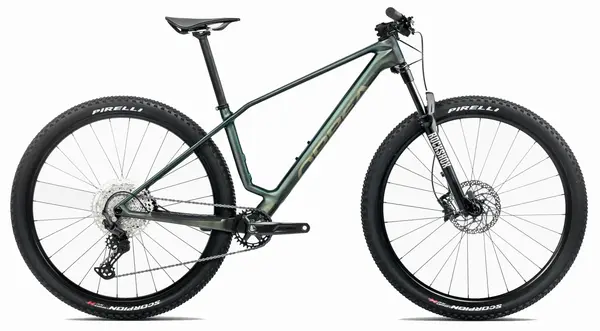
MSRP: $2,499
- Frame: Carbon OMR
- Suspension Travel: 100 mm
- Brakes: Hydraulic discs
- Gearing: Shimano Deore 12-speed
- Tire Size: 29″ x 2.35″
Orbea Bikes is a renowned mountain bike brand specializing in producing high-performance mountain bikes. The Alma M50 is a good hardtail example.
This is a carbon hardtail mountain bike with a 100 mm suspension fork, a 12-speed drivetrain, and 29 x 2.35″ tires.
This model boasts a Shimano Deore Shadow drivetrain, RockShox Judy Silver TK Remote fork, a dropper post, and Shimano hydraulic disc brakes.
Depending on how hard you shred, the Orbea Alma range has quite a large variety of set-ups to choose from, while the geometry of the bike is suitable for top-class riding on intermediate and advanced trails.
2. Santa Cruz Bicycles Chameleon AL D R
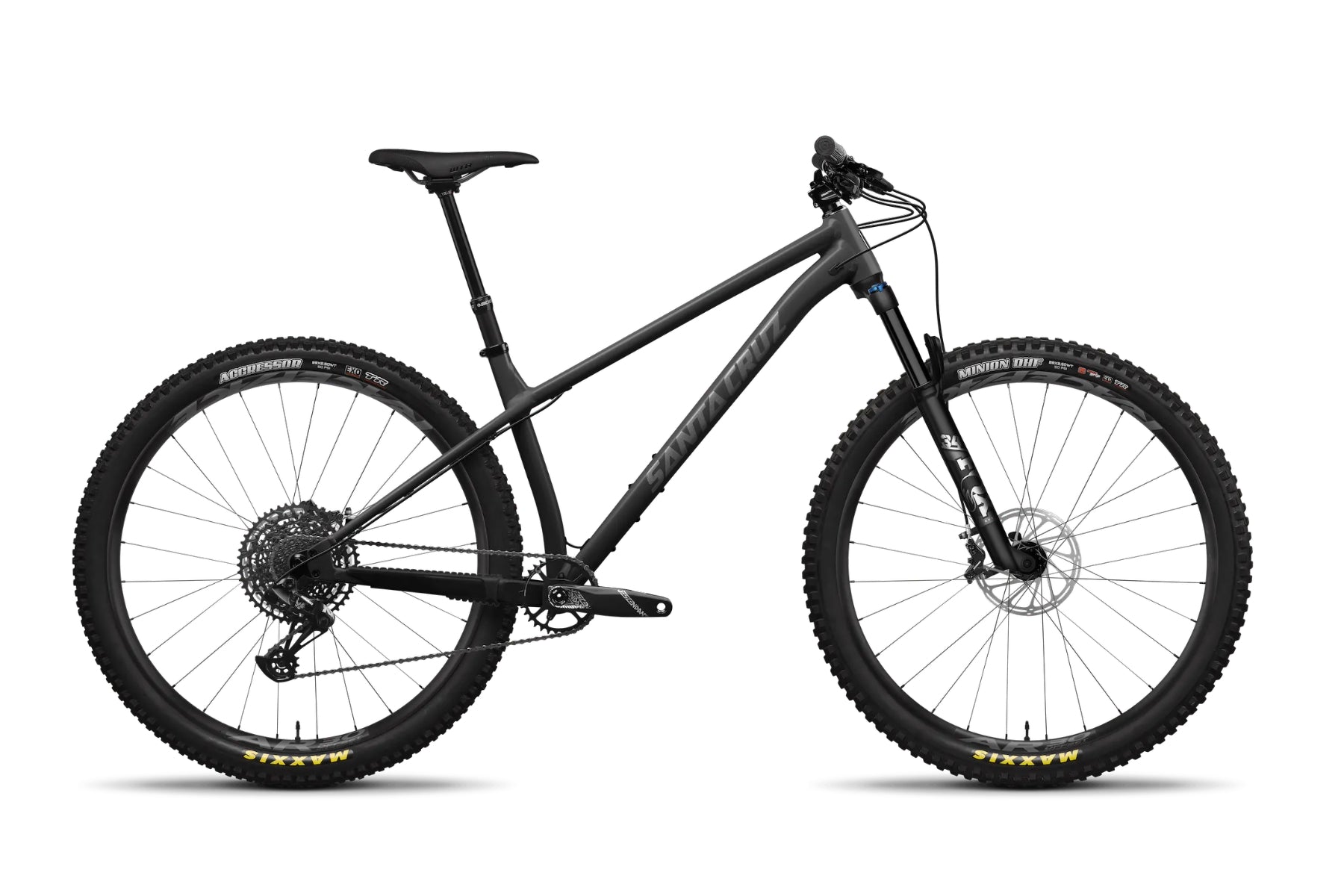
MSRP: $2,600
- Frame: Aluminum
- Suspension Travel: 130 mm
- Brakes: Hydraulic discs
- Gearing: SRAM NX Eagle 12-speed
- Tire Size: 29″ x 2.5″
The latest Chameleon model from Santa Cruz Bicycles is designed to excel in a variety of terrains, just as its name suggests.
The Chameleon AL D R that we’re reviewing here boasts a lightweight aluminum frame paired with a FOX Rhythm 34 Float fork with 130 mm of travel. That makes it suitable for hitting light trails and rough singletracks.
The SRAM NX Eagle drivetrain puts 12 speeds at your disposal and the SRAM G2 R hydraulic disc brakes will give you all the control you need to hit technical descents. A dropper seat post will help in this area as well.
In addition to that, the Santa Cruz Chameleon has 29″ x 2.5″ tires that seem massive and guarantee enough grip on a variety of surfaces.
All things considered, the Chameleon is a high-end option from a reliable brand that can fit the needs of a large variety of riders.
3. Salsa Rangefinder

MSRP: $1,200
- Frame: Aluminum
- Suspension Travel: 120 mm
- Brakes: Hydraulic discs
- Gearing: Shimano Deore 12-speed
- Tire Size: 27.5″ x 2.8″
The Salsa Rangefinder has been one of the best mountain bikes in the entry-level category for years now. It offers an exceptional value for the money for beginners and intermediate riders.
With a 120 mm SR Suntour XCR34 air front suspension and an aluminum frame, the Rangefinder is capable of proper mountain biking on rough trails.
This build also sports a Shimano Deore 12-speed derailleur and shifters, WTB ST i30 wheels, and plus-size 2.8″ Maxxis Rekon tires. The package also includes basic Shimano MT200 hydraulic disc brakes that have plenty of stopping power, but not as much modulation as more expensive brakes.
The Salsa Rangefinder also comes with a TranzX dropper post, which is not a common find in this price range. We also love the numerous mounting points scattered around the frame, which also makes the Rangefinder one of the top MTBs for bikepacking.
4. Cannondale Trail 8

MSRP: $699
- Frame: Aluminum
- Suspension Travel: 75 mm
- Brakes: Mechanical discs
- Gearing: Shimano Tourney 2×7-speed
- Tire Size: 27.5″ or 29″ x 2.25″
The Trail series by Cannondale offers eight affordable mountain bikes, with the Trail 8 offering the best value for the money considering that it retails for just $535.
The Cannondale Trail 8 is a great mountain bike for recreational and beginner cyclists as it has all the right components you expect to see in this price range.
The geometry of this bike is upright and relaxed, which is ideal for beginners, and it’s also a perfect all-rounder mountain bike due to the 75 mm travel fork on the front.
What stands out most about the bike is the 2×7-speed Shimano Tourney drivetrain and Tektro mechanical disc brakes, which is a low-tier combination of components, but solid for a mountain bike under $1,000.
Shorter riders will also appreciate the size-specific wheels, as the Trail 8 comes with 27.5″ wheels in XS and S frame sizes and 29″ wheels in larger frame sizes. This ensures a good fit across the 4’6″ – 6’3″ recommended rider height range.
5. Salsa Beargrease

MSRP: $2,499
- Frame: Carbon
- Suspension Travel: Rigid (None)
- Brakes: Hydraulic discs
- Gearing: Shimano Cues 11-speed
- Tire Size: 27.5″ x 4.0″
The Salsa Beargrease is a fat tire mountain bike with a full carbon fiber frameset and a rigid fork.
This impressive Salsa carbon frame is stiff, responsive, and incredibly lightweight, giving this bike a premium feel. The huge 4.0″ 45NRTH Vanhelga fat tires ensure comfort, traction, and durability on almost any terrain you encounter.
Of course, this bike is slightly limited on chunky downhill terrain without suspension, but the wider tires mean you can ride on snow, sand, and mud without any issues.
The groupset comprises a Shimano Cues 11-speed drivetrain with an 11-50t cassette and reliable Shimano hydraulic disc brakes.
All things considered, if you’re in the market for one of the best fat tire mountain bikes, you won’t get much better than the Salsa Beargrease in the sub $3,000 price range.
6. Scott Spark 910

MSRP: $6,500
- Frame: Carbon
- Suspension Travel: 140 mm
- Brakes: Hydraulic discs
- Gearing: Shimano XT Di2 12-speed
- Tire Size: 29″ x 2.4″
When it comes to ultra-durable, stylish, and well-thought-out mountain bikes, you can surely count on Scott Bikes. The Spark full-suspension bike is equipped with the latest technologies that are ideal for the best mountain bike experience.
This truly is a trail mountain bike to consider when you are looking for a performance race companion.
The Spark is built around a lightweight and comfortable carbon frame that comes equipped with a 140 mm front suspension fork and a 120 mm rear shock.
This build features a Shimano XT Di2 12-speed groupset, which is an excellent mid-priced wireless group.
All builds roll on Maxxis 29″ x 2.4″ tires and come with Industry Syncros Silverton wheels, which are tubeless ready.
Carbon mountain bikes are the lightest on the market, which really makes the Scott Spark stand out, through the price tag will not fit everyone’s budget.
7. Rocky Mountain Growler 40

MSRP: $1,550
- Frame: 6061 Aluminum
- Suspension Travel: Suntour Raidon 34 LOR Air Boost, 140mm Travel
- Brakes: Hydraulic discs
- Gearing: Shimano Deore 12-speed
- Tire Size: 29″ x 2.6″
If you’re looking for one of the best mountain bikes under $2,000 to kickstart your mountain biking adventures, we recommend looking no further than the Rocky Mountain Growler 40. This is a high-travel mid-range hardtail that will help you improve your trail skills and build confidence.
The 29er Rocky Mountain Growler 40 is the brand’s middle-of-the-line aluminum hardtail with a massive 140 mm fork on the front. The rather slack geometry is best for all-mountain blasting, while the 29-inch wheels suit the riders who like to go fast.
We believe that hardtail MTBs are a much better choice in this price range than any similarly priced full-suspension mountain bike because of the overall value for the money you get.
The Growler 40 comes with a Shimano Deore 12-speed groupset, hydraulic disc brakes, tubeless rims, and tried and true Maxxis Minion 2.6″ wide tires.
8. Co-op Cycles DRT 1.3

MSRP: $1,399
- Frame: Aluminum
- Suspension Travel: 120 mm
- Brakes: Hydraulic discs
- Gearing: Shimano Deore 11-speed
- Tire Size: 27.5″ or 29″ x 2.6″
The Co-op Cycles DRT 1.3 is as tough as it looks. Equipped with solid components, a durable frame, and a long-travel RockShox Judy Silver TK Solo Air 120 mm fork in the front gives you a ton of freedom when it comes to choosing the most challenging line on the trails!
The 1×12 Shimano Deore drivetrain is known for being light, reliable, and easy to maintain. Whereas Shimano MT201 2-piston hydraulic brakes and Maxxis Rekon 2.6″ tires inspire confidence by providing enough grip and braking control in tricky situations.
Co-op Cycles DRT 1.3 has some fantastic surprises when it comes to the components fitted to it. It even comes with a TranzX dropper seat post, which is a rare find on entry-level MTBs.
When we saw the price and analyzed the parts, we had no second thoughts that this is one of the best mountain bikes under $1,500.
9. Salsa Timberjack XT 29

MSRP: $2,200
- Frame: Aluminum
- Suspension Travel: 130 mm
- Brakes: Hydraulic discs
- Gearing: Shimano XT 12-speed
- Tire Size: 29″ x 2.6″
Salsa Timberjack is one of the best mountain bikes the brand has to offer. This bike is ideal for riders who want to enjoy a range of terrains off-road, including long climbs and technical descents.
With all of its high-tech features, starting with the hydroformed aluminum frame and RockShox 35 Gold RL 130mm fork suspension, it is hard not to include the Timberjack on this list.
Moreover, it comes with 29-inch wheels and 2.6″ tires which make for more stability and faster rolling speeds. Sadly the Salsa Timberjack does not include a dropper post, but it justifies its price tag with a few other high-value components.
The Shimano XT 12-speed drivetrain can handle hard riding and the Shimano hydraulic disc brakes will give you control when you need to navigate tricky sections of the trail.
10. Ibis Ripmo AF Deore
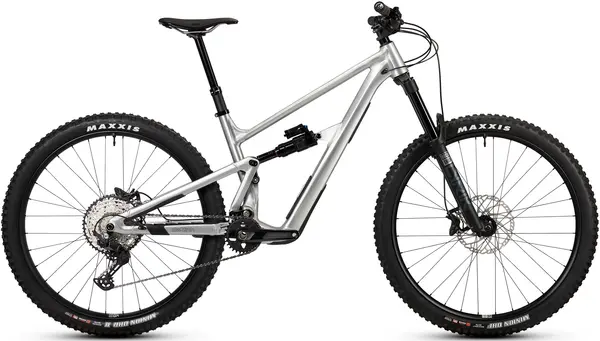
MSRP: $3,299
- Frame: Aluminum
- Suspension Travel: 160 mm
- Brakes: Hydraulic discs
- Gearing: Shimano Deore 12-speed
- Tire Size: 29″ x 2.4″
The Ibis Ripmo is a high-end aluminum all-mountain bike with an aggressive frame geometry that combines longer reach with a steep, 76-degree seat tube angle.
This places the rider more centrally over the pedals for better control on steep, tricky descents. In addition, the slacker 64.9-degree headtube angle makes climbing less twitchy, resulting in an excellent all-around trail bike.
The front fork is a Marzocchi Bomber Z1 Coil with 160mm of travel and the rear suspension features a Marzocchi Bomber Air shock.
For downhill riding, you also get a dropper post, aluminum rims, and Maxxis Assegai 29 x 2.4″ tires.
All in all, the Ibis Ripmo AF is a well-rounded full-suspension mountain bike perfect for enduro and all-mountain trails and suitable for all levels of riding.
11. Trek Top Fuel 8 Gen 4
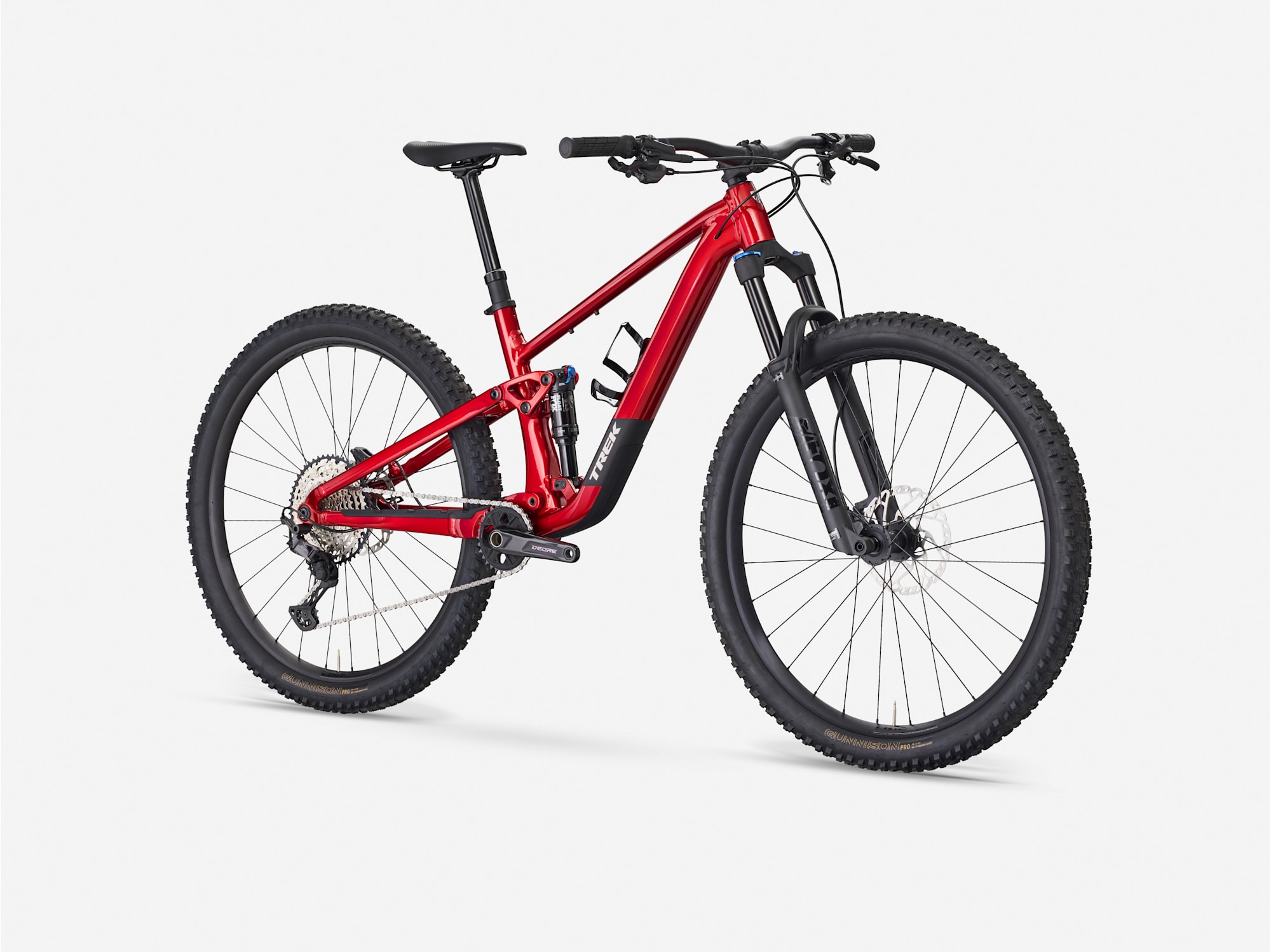
MSRP: $4,200
- Frame: Aluminum
- Suspension Travel: 130 mm
- Brakes: Hydraulic discs
- Gearing: Shimano XT 12-speed
- Tire Size: 29″ x 2.4″
The Trek Top Fuel 8 is a premium full-suspension mountain bike made by one of the biggest brands in the industry.
The 130 mm of travel in the front and the rear categorizes this bike as a cross-country MTB but gives it all the capabilities of a full-suspension trail mountain bike.
The Top Fuel 8 features a 12-speed Shimano XT drivetrain, lightweight aluminum frame, and 2.4-inch Bontrager tires.
The Fox Rhythm 34 suspension fork and Fox Performance Float DPS rear shock will give you the necessary control on rugged trails, while the Bontrager dropper post is a necessity for technical descents.
We also love the dark red finish, though you can get the Trek Top Fuel 8 in all-black as well.
12. Cannondale Habit 4

MSRP: $2,300
- Frame: Aluminum
- Suspension Travel: 140 mm
- Brakes: Hydraulic discs
- Gearing: Shimano Deore 12-speed
- Tire Size: 29″ x 2.4″ (27.5″ on XS)
Cannondale never fails to surprise us with the bang for the buck its mountain bikes offer. The Cannondale Habit 4 is an entry-level full-suspension mountain bike under $3,000 with trail-focused geometry. It boasts solid features packed into an affordable price tag.
The new Cannondale Habit 4 is built for trail enthusiasts who wish to start amateur racing or check out some popular descents in their area.
It comes with a lightweight SmartForm C1 alloy frame that offers nimble and responsive handling, especially on tricky descents. The SmartForm C1 alloy is the perfect alternative to much pricier carbon frames seen in that price range.
In addition to that, the combination of a RockShox Recon RL 140 mm front suspension and a RockShox Deluxe Select 130mm rear suspension makes light of any jumps and rock gardens you encounter on the trail.
Finally, the 12-speed Shimano Deore derailleur is among the best you can get in this price range, and the same can be said for the Shimano MT200 hydraulic disc brakes.
If you want one of the most affordable mountain bikes with full suspension that is actually worth buying, we recommend shortlisting the Cannondale Habit 4.
13. Norco Sight C2
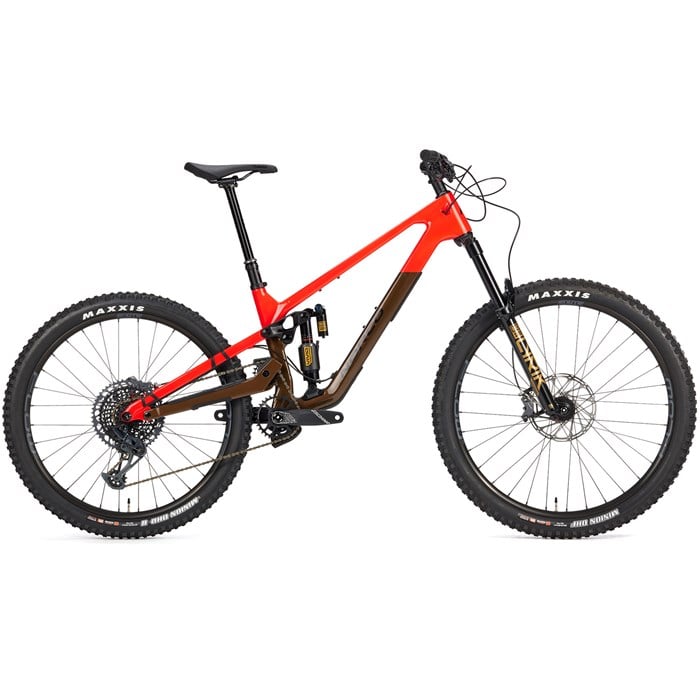
MSRP: $5,499
- Frame: Carbon
- Suspension Travel: 160 mm
- Brakes: Hydraulic discs
- Gearing: SRAM GX Eagle 12-speed
- Tire Size: 29″ x 2.5″ / 2.4″
The Norco Sight C2 is a line of high-end carbon trail bikes with the best components for performance riders. Norco mountain bikes are perfect for professional trail riders who want to start winning races, therefore the bike might be too much for a casual cyclist.
The Norco Sight C2 is a premium long-travel bike featuring a light, stiff, and responsive carbon frame, that can win any Enduro podium!
RockShox Lyrik Ultimate fork and RockShox Super Deluxe Ultimate DH rear shock will allow you to start practicing on terrains unimaginable to you before.
For the $5,500 that you’d need to pay for this build, you will get one of the top trail bikes with a SRAM GX Eagle 12-speed rear derailleur, which is the best you can find on the market right now on mid-range mountain bikes.
Maxxis Assegai and Minion 29 x 2.5″ / 2.4″ tires are a combo that will make you fast on hardpacked flat sections and offer perfectly optimized grip in tight turns.
Simply put, the Norco Sight C2 speaks for itself—It’s one of the best mountain bikes you’ll fall in love with and finally start winning some races.
14. Diamondback Yowie

MSRP: $4,750
- Frame: Carbon
- Suspension Travel: 130 mm
- Brakes: Hydraulic discs
- Gearing: SRAM NX Eagle 12-speed
- Tire Size: 29″ x 2.4″ (f) and 2.25″ (r)
The Diamondback Yowie is an all-terrain machine that can both climb hills efficiently and tackle fast flats and downhill. This Diamondback mountain bike is built around a carbon frame, which makes it amazingly lightweight, stiff, and resilient.
The frame is made complete with the Rockshox Pike Select fork with 130mm of travel and the RockShox SIDLuxe Select+ rear suspension linked with Diamondback’s suspension system. These components make this bike a true trail machine but give it some enduro traits as well. This frame has fully internal cable routing and modern, progressive geometry.
When it comes to gearing, the Diamondback Yowie features a lightweight and quick 12-speed SRAM NX Eagle drivetrain. Hydraulic disc brakes are a must on a bike of this caliber, so the SRAM Guide T hydraulic brakes provide more than ample braking.
The Diamondback Yowie is an incredibly capable and plush 29er trail bike designed for the harshest terrain and surprisingly efficient climbing.
What to Consider When Choosing the Best Mountain Bike?
How Much Should You Spend on a Beginner Mountain Bike?
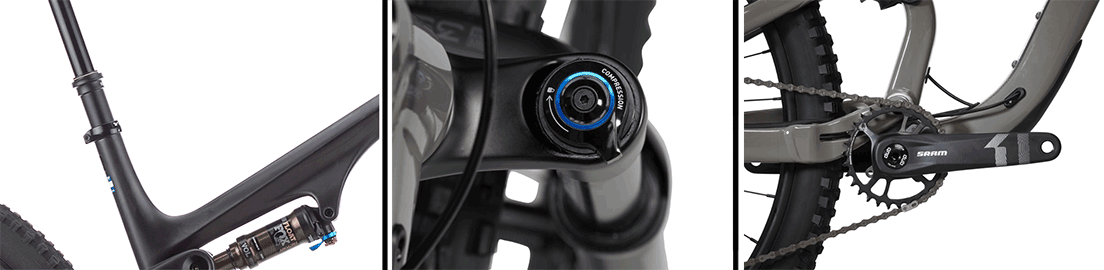
Dropper seat post with a switch, locking & adjustable fork, single front chainring with 11/12 speed cassette
Mountain bike prices vary widely, and what you get for your money changes a lot from one tier to the next. To avoid overpaying or ending up with a bike that holds you back, it helps to understand what each price category typically offers.
Below are the most common price ranges for beginner MTBs and what you should expect in terms of parts, performance, and long-term value.
- Around $500–$700: Basic Hardtails for Light Trails
At this price, expect an aluminum hardtail frame, mechanical or entry-level hydraulic disc brakes, and a coil suspension fork with limited adjustments. These bikes are great for paved paths, gravel, and light weekend trails but will struggle on rough terrain. - $800–$1,000: Better Components and Real Trail Capability
Bikes in this range usually include hydraulic disc brakes, a coil fork with lockout, wider gearing, and more stable geometry. They’re suitable for proper green and some blue-level trails and offer the best performance-to-price ratio for most new riders. - $1,100–$1,400: Quality Hardtails With Modern MTB Features
This tier is where riding confidence jumps significantly. Look for an air-spring suspension fork (much lighter and more adjustable), a 1x drivetrain with 10–12 gears, tubeless-ready wheels and tires, and internal cable routing. These bikes are trail-ready and feel noticeably smoother and more responsive. - $1,500–$1,900: Premium Hardtails + Entry-Level Full-Suspension
Here you gain higher-quality frames, thru-axle wheels for stiffness, dropper seat posts for better descending, upgraded brakes, and more robust components. You may also find the first worthwhile full-suspension bikes in this bracket, although hardtails still offer better value. - $2,000 and Up: Performance Full-Suspension for Serious Beginners
These bikes deliver significantly better suspension performance, durable drivetrains, and geometry optimized for modern technical trails. If you know you’ll progress quickly or plan to ride challenging terrain, starting here can save you money long-term.
What Wheel Size Is Best for a Mountain Bike?
Modern mountain bikes almost always use 27.5-inch or 29-inch wheels, each suited to different riding styles and rider preferences.
- 29-inch wheels are common on XC, trail, all-mountain, and enduro bikes. They roll over obstacles more easily, maintain speed better on long straight sections, and offer great stability. Taller riders often prefer them, and they’re ideal if you value efficiency and momentum.
- 27.5-inch wheels (650b) are used on XC, trail, all-mountain, enduro, and downhill bikes. They feel more agile in tight or technical terrain, accelerate faster, and can run wider 2.4 to 2.8-inch tires for improved comfort and grip.
- 26-inch wheels are now mostly found on older bikes or very small frame sizes. They’re less common for modern trail riding but still appear on XS frames, dirt jump bikes, and some budget models.
How Much Suspension Travel Do You Need?
Suspension travel refers to how much movement your fork or rear shock can absorb, and it plays a major role in how a mountain bike feels on different terrain.
- Short-travel bikes (100–120 mm) are efficient climbers and feel fast and responsive on smoother trails or rolling terrain. They prioritize pedaling efficiency and all-around performance.
- Mid-travel bikes (120–150 mm) strike a balance between climbing efficiency and downhill capability. They’re versatile and capable on mixed terrain, though they give up some efficiency compared to short-travel bikes and some stability compared to long-travel options.
- Long-travel bikes (150–200 mm) are designed for aggressive riding and high-speed descents. They excel on rough terrain, drops, and technical downhill lines, offering maximum control and cushioning.
Mountain Biking for Beginners — 19 Tips to Improve Your Skills
Each travel range has clear strengths, but mid-travel bikes blend these traits for riders who want one bike to handle a bit of everything.
How Many Gears Do You Need on a Mountain Bike?
Modern mountain bikes offer plenty of gearing range for almost every rider, so the number of gears is rarely a limiting factor. Most bikes today use 1x, 2x, or (less commonly) 3x drivetrains, giving anywhere from 9 to 27 total gears. Any of these systems will get you up most climbs, with only extremely steep gradients requiring you to hop off and push.
So what’s the difference between 1x, 2x, and 3x Drivetrains?
- 1x (single chainring): Common on mid to high-end MTBs. Simpler, lighter, and easier to use since there’s no front derailleur.
- 2x (double chainring): Typical on mid-range bikes. Offers a wide range without too many overlapping gears.
- 3x (triple chainring): Mostly found on budget bikes or older models. Provides a very wide range but adds weight and complexity.
How Does Head Tube Angle Affect Mountain Bike Handling?
The head tube angle plays a major role in how a mountain bike handles on the trail. A steeper angle makes the bike more responsive, while a slacker angle improves stability at high speeds and on steep descents. Here’s a simple breakdown:
- Cross-country bikes (around 69–71°): These have steeper head angles, placing the fork more upright. The result is quick, precise steering that feels efficient on climbs and smooth trails.
- Trail and enduro bikes (around 65–68°): A slightly slacker angle makes the fork sit farther out in front of the bike. This increases stability on rough terrain and steep descents, though it reduces low-speed agility.
- Downhill bikes (62° and below): These use very slack head angles for maximum stability at high speeds and on extreme downhill tracks. Steering feels slower, but control is dramatically improved on steep, technical terrain.
Is There a Difference Between Women’s and Men’s Mountain bikes?
Most women’s mountain bikes aren’t drastically different from men’s, but there are a few fit-focused changes that make them more comfortable for many female riders.
The top tube is often slightly shorter, which reduces the reach to the handlebars and creates a more upright position. Many models also use a lower standover height to make mounting and dismounting easier. Components like saddles, grips, and sometimes suspension tuning may also be adjusted to better match common body-proportion differences.
That said, plenty of women prefer unisex or men’s models, so the best choice always comes down to fit and comfort.
What Are the Best Mountain Bike Brands to Consider?
Brands that specialize heavily in mountain biking include Ibis, Santa Cruz Bicycles, Yeti, Orbea, and Evil. These companies are known for premium frames, advanced suspension platforms, and rider-focused geometry built for technical trail riding and racing.
Other well-known and widely trusted mountain bike brands include Giant, Trek, Mongoose, Cannondale, Diamondback, GT Bicycles, Rocky Mountain, Scott, etc. These brands offer everything from entry-level hardtails to professional-grade full-suspension models, making them accessible for beginners and seasoned riders alike.
If you want to find out more, read our Best Bike Brands guide!
Final Takeaways
Before choosing a mountain bike, get clear on how you plan to ride. Relaxed forest paths, long cross-country days, and downhill runs each require very different setups.
Once you know your preferred terrain and riding style, set a realistic budget and focus on the models that match both your goals and skill level. This approach makes the buying process easier and ensures you end up with the best mountain bike for your needs.
Share this on:




I have a bike I bought in 1981. It’s blue with General on the frame. It came with a blue plastic water bottle and a tiny gold colored pump, both attached to the frame. It is a 6 speed. When I ride it everyone looks at it like they’ve never seen one. lol No fenders and it cost $300, an unheard of price back then for Wichita Falls, Texas. I’ve never been able to find it online. Wondered what it’s worth.
Hi Bob, I can’t give you more information without seeing the frame first, but it definitely sounds like a keeper. We love vintage bikes!
In your section on the Diamondback Atroz 2 you write “The SR Suntour Raidon-R rear air shock will help you with this. It has a rebound adjust, so it won’t feel like a pogo stick, like many other entry-level forks.”
The Radion-R is a rear shock, this much you got right. You then go on to note that “it won’t feel like a pogo stick, like many other entry-level forks”.
Why on earth are you comparing the feel of the rear shock to that of an entry level fork? Forks exist exclusively on the FRONT of a bike. Find a bike with a rear fork and I”ll be extremely impressed. If you want to compare the rear shock to something, let that something be another rear shock as opposed to a completely different component at the opposite end of the bike.
Also the writing here is just bad. Lets say that that it was somehow appropriate to compare the Raidon-R to entry-level forks. If you were trying to make a point that the Raidon-R was better than the entry level forks you would say “The SR Suntour Raidon-R rear air shock will help you with this. It has a rebound adjust, so it won’t feel like a pogo stick, *unlike* many other entry-level forks.”
When you use “like” as opposed to “unlike” you are essentially saying that the Raidon-R doesn’t feel like a pogo stick and neither do the entry level forks you are comparing it to
In the next paragraph you say “I especially liked the 9-speed drivetrain, which keeps shifting simple and effective. The rear derailleur is a Shimano Acera, which is expected on best mountain bikes.”
The Acera line is never expected on anything other than entry level bikes. The reason? Acera is Shimanos absolute lowest entry level complete Groupset. This is why you can buy and brand new Shimano Acera rear derailleur brand new in the box from Walmart for $24.99.
“….expected on best mountain bikes.”
Come on man…..
I could go on like this all the way down your entire article. Bottom line is that given your overwhelming lack of knowledge on the subject of all things “Mountain bike” its downright inappropriate and extremely uncool of you to write an article intended to offer guidance to others on the subject. I get that it may make you feel helpful but the fact of the matter is that its never helpful to speak with authority on a subject which you have very little knowledge of. People who put their trust in your words will ultimately be mislead and potentially let down, disappointed or god forbid even injured when they made decisions based upon the poor information you’ve given them. Please consider taking this article down or editing it after having it reviewed by someone who knows what their talking about.
Hi Matt, thanks for pointing those mistakes out. They were simply slips of tongue and they are now corrected. 🙂 Happy riding!