
Best Bike Speedometers and Computers to Get in 2026
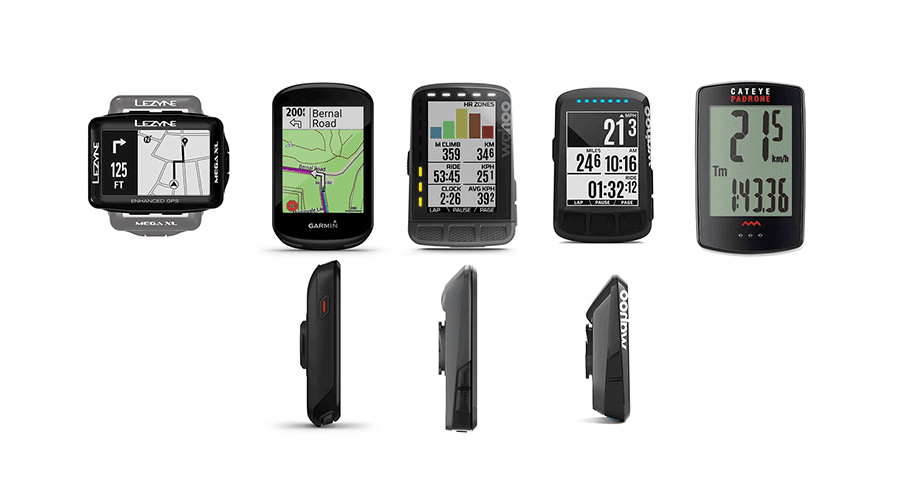
A quality bike speedometer or cycling computer is one of the most useful tools you can add to your setup.
Whether you’re a casual rider tracking weekend mileage or a dedicated cyclist training for your first century ride, these devices give you real-time data that helps you ride smarter, track progress, and stay motivated.
From speed and distance to cadence, navigation, and advanced performance metrics, the right bike computer can transform every ride into a more informed and enjoyable experience.
Read on to learn about the top models we recommend!
What Are the Key Bike Computer Functions?
When choosing a bike computer, look for features that match your riding style and goals. The most useful functions include:
Basic Bike Computer Functions
These functions are ideal for beginners are the bare minimum you should be looking for in the bike computer or speedometer you choose:
- Current speed so you always know how fast you’re riding.
- Distance tracking for daily rides and long-term mileage goals.
- Ride time to measure how long you’ve been on the bike.
- Average and max speed for simple performance insights.
- Basic trip recording to review each ride at a glance.
- Wireless connectivity (optional) for easy setup without cables.
- Long battery life so the device lasts through multiple rides.
Advanced Bike Computer Functions
These are more advanced functions that are not necessary for every rider, but are nice to have depending on how you ride and what your goals are:
- GPS navigation and route recording for exploring and tracking precise ride data.
- Turn-by-turn directions for safer, hands-free navigation.
- Elevation and gradient tracking to analyze climbs and total ascent.
- Cadence monitoring to improve pedaling efficiency.
- Heart rate monitoring for structured training and fitness improvement.
- Power meter compatibility for detailed performance and watt-based training.
- Advanced ride metrics like Training Load, VO2 max estimates, or recovery suggestions (brand-dependent).
- Smartphone notifications to stay connected without reaching for your phone.
- Full Bluetooth and ANT+ integration for syncing sensors and fitness apps.
What Are the Main Types of Bike Computers? And Which One You Should Choose
Bike computers come in several types, each offering a different balance of features, accuracy, and price. Understanding the differences will help you choose the right model for your riding style and budget.
Wired Speedometers (Best for Budget-Focused Riders)
These entry-level models use a wired sensor on the fork to track speed and distance.
They’re reliable, affordable, and simple, making them a good choice for beginners who want basic ride data without paying for extras.
Wireless Speedometers (Great for Everyday Cyclists)
Wireless models use a fork-mounted sensor that transmits data to the head unit on your handlebars.
They clean up your cockpit and reduce installation hassle. Most offer core metrics like speed, distance, and ride time with better usability than wired devices.
GPS Bike Computers (Ideal for Training, Navigation, and Long Rides)
GPS computers track your speed, route, elevation, and performance metrics without needing a wheel sensor.
They’re the top choice for road cyclists, mountain bikers, and gravel riders who want navigation, Strava integration, advanced training tools, and highly accurate data.
Smartphone-Based Bike Computers (A Flexible, Low-Cost Option)
With the right mount and app, your phone can act as a bike computer.
This setup works well for occasional riders or commuters who want GPS navigation and basic metrics, though battery drain and durability can be limitations.
Table of Contents
Top Choices in Different Categories
- Cheapest Speedometer: CATEYE Velo 7
- Best Speedometer for Beginners: BONTRAGER RideTime Elite
- Best Bike Computer for City Commuting: GARMIN Edge 540
- Best Bike Computer Overall: WAHOO ELEMNT BOLT GPS
Best Bike Speedometers Under $50
CATEYE CC-VL520 Velo 7
Best cheapest reliable basic speedometer

MSRP: Check on Amazon
- Essential speed tracking
- Simple wired setup
- Auto start/stop
- Easy-read display
CatEye Velo 7 (CC-VL520) is the best choice for riders who want a simple, reliable, and ultra-affordable bike computer from a trusted brand.
It’s ideal for beginners, commuters, or anyone who only needs essential ride data without paying for advanced GPS features.
The Velo 7 tracks current, average, and max speed, trip distance, total mileage, and includes a clock and auto start/stop to save battery. Its wired setup is basic but dependable, and the display is easy to read.
The main limitation is its simplicity, so performance-focused cyclists may outgrow it, but for everyday riders, it offers unbeatable value.
Wired Bicycle Computer
Best for beginners who want lots of functions

MSRP: Check on Amazon
- LED backlight
- 19 core functions
- Waterproof design
- Long battery life
Wired Bicycle Computer is a solid budget-friendly option for riders who want more features than a basic speedometer without stepping up to a full GPS unit.
It’s ideal for commuters and recreational cyclists who need clear, reliable ride data.
This model includes an LED backlight for night visibility and packs 19 useful functions, including speed tracking, distance, ride time, average speed, calories, and an alarm.
The waterproof build and long battery life make it dependable year-round. Its wired setup is the only real limitation, but for everyday riding, the Wired Bicycle Computer delivers excellent value for the price.
Best Bike Speedometers & Computers Under $100
BONTRAGER RIDEtime Elite
Best for fitness-focused cyclists who use ANT+ sensors

MSRP: $75
- ANT+ sensor support
- Large 2″ display
- Custom tri-field view
- Auto functions
Bontrager RIDEtime Elite is an excellent choice for riders who want a sleek, mid-range wireless bike computer with pro-level data tracking.
It’s ideal for fitness cyclists, road riders, and anyone already using ANT+ sensors who wants more detailed training metrics without upgrading to a full GPS unit.
The large 2-inch screen is easy to read, and the unit mounts cleanly at the center of your handlebars.
With a programmable backlight and customizable tri-field display, you can view speed, cadence, power, or heart rate at a glance. Its lightweight build, auto functions, and simple CR2032 battery power make it reliable and low-maintenance.
The only limitation is that advanced metrics require compatible ANT+ sensors.
CATEYE Padrone
Best for riders who want an easy-to-read display

Squint-free visibility and a fast, simple set-up
MSRP: Check on Amazon
- Oversized display
- Simple wireless setup
- Core speed metrics
- Universal bracket
CatEye Padrone is perfect for riders who want a simple, squint-free cycling computer with an oversized display and a hassle-free setup.
Its extra-large screen makes it ideal for older riders, commuters, or anyone who prefers quick at-a-glance visibility without digging through tiny menus.
The analog wireless sensor mounts easily with zip ties, and the FlexTight bracket fits almost any handlebar.
You get all the core metrics, such as the current, average, and max speed, plus trip distance, odometer, elapsed time, and auto start/stop.
It’s lightweight, runs on a CR2032 battery, and offers basic functionality with minimal fuss, though it lacks advanced training features found on higher-end units.
LEZYNE Macro Plus GPS
Best for cyclists who want compact GPS navigation

MSRP: Check on Amazon
- Full GPS navigation
- App + Strava sync
- Horizontal/vertical screen
- 28-hour battery
Lezyne Macro Plus GPS is an excellent choice for cyclists who want a compact, fully featured GPS computer without paying premium prices.
Its small, lightweight design frees up handlebar space, and the screen can rotate horizontally or vertically to suit your preference. Despite its size, it delivers robust features like full GPS navigation, route importing, and Bluetooth Smart connectivity.
Pairing it with the Lezyne Ally app unlocks real-time data, turn-by-turn audio cues, and syncing with platforms like Strava and TrainingPeaks.
With up to 28 hours of battery life, a weather-resistant build, and multiple bike profiles, it’s a versatile option, but riders wanting a larger display may find it less ideal.
Best Bike Computers Under $350
GARMIN Edge 540 GPS Bike Computer
Best Overall GPS bike computer
MSRP: $350 (REI.com)
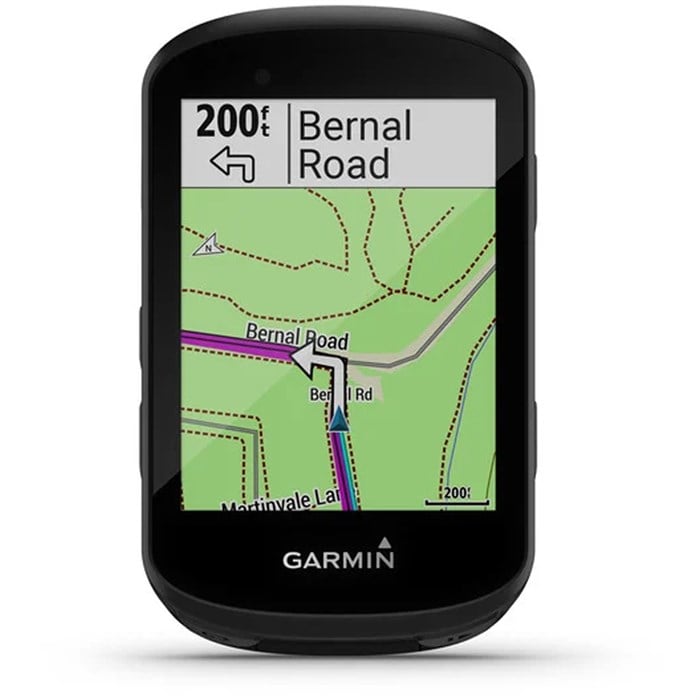
- Turn-by-turn GPS
- 40-hour battery
- Sensor compatibility
- Crash detection
The Garmin Edge 540 is a great choice for riders who want reliable navigation and performance tracking without stepping up to premium ultra-high-end models.
It’s especially useful for road, gravel, and MTB cyclists who depend on accurate turn-by-turn GPS, long battery life, and compatibility with heart rate, cadence, and power sensors.
The crash detection and ride-tracking features add peace of mind, and the unit pairs seamlessly with iOS and Android.
Its main drawback is the price, which may feel steep for casual riders, but the mix of strong mapping, training tools, and 40-hour endurance makes it a solid long-term investment.
WAHOO Fitness ELEMNT BOLT GPS
Best choice with a monochrome screen

MSRP: $350 (REI.com)
- Monochrome clarity
- ANT+/Bluetooth sensors
- Back-to-Start routing
- Aerodynamic design
The Wahoo ELEMNT BOLT is ideal for riders who want a fast, streamlined GPS computer without the distractions of a color display.
Its monochrome screen is crisp, power-efficient, and easy to read in bright sunlight, making it a favorite among road cyclists and racers.
The unit syncs wirelessly with ANT+ and Bluetooth sensors for heart rate, cadence, power, and rear-radar alerts, and its turn-by-turn GPS navigation and Back-to-Start feature make it reliable for long solo rides.
With smart alerts, Strava Live Segments, lap tracking, an altimeter, temperature readings, and a 15-hour battery life, it packs advanced features into a compact, aerodynamic design.
LEZYNE Mega XL GPS
Best for cyclists who want a highly customizable display

MSRP: Check on Amazon
- Extra-large rotating screen
- Dual ANT+/Bluetooth
- Structured workouts
- Trainer mode
The Lezyne Mega XL GPS is ideal for riders who want big-screen visibility and deep training analytics in one device.
Its oversized, rotatable display makes maps, data fields, and turn-by-turn navigation easy to read at a glance, whether you mount it horizontally or vertically.
With enhanced GPS accuracy and dual connectivity, you can pair it simultaneously with your smartphone and ANT+ sensors for real-time speed, power, cadence, and heart-rate data.
The Mega XL also integrates seamlessly with TrainingPeaks and Today’s Plan, supports structured workouts, shows calls and notifications, and even includes an indoor training mode.
It’s a powerful option for data-focused cyclists who want maximum clarity on the road or trainer.
Best Bike Computers Under $500
WAHOO Fitness ELEMNT ROAM GPS Bike Computer
Best for riders who want pro-level training features

MSRP: $400 (REI.com)
- Full-color mapping
- Smart rerouting
- TrainerRoad compatible
- 17-hour battery
The Wahoo ELEMNT ROAM is built for cyclists who want a high-end GPS computer with exceptional navigation and training tools.
Its larger full-color Gorilla Glass display, onboard zooming and panning, and smart rerouting make it perfect for touring, gravel adventures, and exploring unfamiliar routes.
Dual-band Bluetooth and ANT+ connectivity let you pair heart-rate, cadence, power, and radar sensors effortlessly, while full TrainerRoad and KICKR compatibility makes it equally strong indoors.
With a 17-hour battery life, ambient light sensor, temperature and altitude tracking, and smart notifications, the ROAM delivers everything performance-focused riders need for long, demanding rides.
GARMIN Edge 840
Best for serious cyclists who want deep training insights

MSRP: $450 (REI.com)
- Advanced training metrics
- Touchscreen + buttons
- Trailforks support
- Bike alarm security
The Garmin Edge 840 is built for riders who want pro-level performance metrics, powerful navigation, and long battery life in one compact device.
It tracks everything from VO₂ max and recovery to heat and altitude acclimation, nutrition reminders, hydration, and detailed ride analytics when paired with compatible sensors.
The touchscreen and buttons make it easy to use in any weather, and the PIN-protected bike alarm adds peace of mind during café stops.
With MTB jump tracking, GRIT and FLOW metrics, full GPS navigation, and Trailforks support, the Edge 840 is ideal for road cyclists, endurance riders, and mountain bikers who want an all-in-one training and routing tool.
Best Bike Computers Over $500
GARMIN Edge 1050
Best for long-distance touring


MSRP: $700 (REI.com)
- 3.5″ touchscreen
- 60-hour battery
- Full touring navigation
- Varia compatibility
The Garmin Edge 1050 is Garmin’s most advanced and feature-rich bike computer, built for riders who want full navigation, deep performance tracking, and exceptional battery life on multi-day tours.
Its bright 3.5-inch touchscreen makes maps and data easy to read, while turn-by-turn directions and a “back to start” feature ensure you never get lost.
With up to 60 hours of battery life, it’s ideal for endurance riders who spend long days in the saddle.
The Edge 1050 pairs with cadence and speed sensors, supports Garmin Varia for improved on-road awareness, and syncs seamlessly with your smartphone so you can manage notifications and ride data without stopping.
Frequently Asked Questions
1. What is a bike computer and why use one?
A bike computer is a handlebar-mounted device that tracks key ride data such as speed, distance, time, location, and sometimes cadence or calories. Riders use it to monitor training progress, navigate new routes with GPS, and access clear, accurate stats in real time. Most models offer quick setup, intuitive menus, and auto start-stop features.
2. What are the best bike speedometer brands?
Some of the most reliable bike computer and speedometer brands include Garmin, Wahoo, CatEye, Lezyne, Specialized, Polar, and Bontrager. These companies are trusted by both recreational riders and pros for their accuracy, durability, and user-friendly designs. Garmin and Wahoo excel in GPS tech, while CatEye and Lezyne offer affordable, dependable everyday options.
3. What are the best cycling apps to monitor ride stats?
Popular cycling apps for tracking your ride stats include Strava, RidewithGPS, Komoot, Garmin Connect, Today’s Plan, and TrainingPeaks. Each serves a different type of rider — Strava for social motivation, Komoot and RidewithGPS for navigation, and Garmin Connect or TrainingPeaks for structured training and performance analysis.
4. Can I use my smartwatch to track cycling stats?
Yes, you can use a smartwatch to track cycling stats, but many riders still prefer bike computers for accuracy and convenience. A bike computer provides more precise start-stop tracking, a clearer display, and metrics designed specifically for cycling. Smartwatches are more versatile and budget-friendly, making them a good option for casual riders.
5. Can you use a speedometer with a kids’ bike?
Yes, you can absolutely use a speedometer on a kids’ bike, and it’s often a fun way to keep them motivated. Once installed, it helps them see how far they’ve ridden and encourages them to spend more time cycling. Many parents are surprised by how many miles their kids rack up over a summer.
6. Is using a smartphone as a bike computer a good alternative?
Using a smartphone as a bike computer can work, but it comes with trade-offs. While apps provide solid tracking and good navigation, phones aren’t built for constant vibration, rough roads, or harsh weather, which can lead to damage over time. A dedicated bike computer is more durable, more secure on the bars, and easier to read mid-ride, though a quality phone mount can help if you prefer using your phone.
7. Can I use a speedometer on any bicycle?
Yes, you can use a speedometer on almost any bicycle as long as the sensor can be mounted properly and the wheel size is entered correctly. Whether it’s a road bike, mountain bike, hybrid, or kids’ bike, most models are universally compatible and easy to install.
8. Are bicycle speedometers accurate?
Yes, bicycle speedometers are generally very accurate as long as they’re set up correctly with the right wheel size and sensor placement. Quality models from trusted brands deliver reliable speed and distance data. If you ever want to double-check, you can compare your readings with a cycling app like Strava or Komoot.
Still Looking for the Right One?
Bike Computers on REI Bike Computers on JensonUSA
Share this on:




Which computer bike shows distance and average speed every 10 meters instead of every 100 meters
Hi Nicolas! All bike computers and speedometers on this list update the distance every 10 meters at least, especially the more advanced ones.