Scott Spark DC Series Review: Five New Bikes Explained
The Scott Spark DC (Downcountry) is the more adventurous sibling of the race-focused Spark RC. It’s still light, still built to climb quickly and still unmistakably a Spark, but Scott has given it considerably more suspension and a stronger appetite for rough trails.
And we mean considerably more.
The top Spark DC models pair a 140mm RockShox Pike fork with 138mm of rear travel. That’s a big jump from what we’d normally expect from an XC-derived bike and enough to put the Spark DC surprisingly close to a proper trail bike.
Weight tells the other half of the story. The range-topping Spark DC Factory weighs a claimed 25.35lb (11.5kg) tubeless. That’s lighter than many bikes with much less suspension.

Source: Scotty Laughland
So, this isn’t Scott simply putting a bigger fork on the Spark and calling it “downcountry.”
The frame is new, the suspension layout has been refined and there are some genuinely clever details hidden inside it. There’s internal frame storage, an integrated suspension travel indicator, adjustable cable routing, full dropper-post insertion and even a steering limiter to stop the bars smashing into the frame during a crash.
More importantly, the Spark DC now has a very clear job within Scott’s mountain bike range.
The Spark RC remains the racer. Scott describes that bike specifically as a World Cup race platform. The Spark DC is aimed at riders who still want XC-like efficiency but care more about the ride itself than a finish-line result.
There are five versions:
| Model | Price |
|---|---|
| Scott Spark DC 40 | $4,399.99 |
| Scott Spark DC 30 | $5,399.99 |
| Scott Spark DC 20 | $7,299.99 |
| Scott Spark DC 10 | $9,999.99 |
| Scott Spark DC Factory | $12,999.99 |
That’s a huge price spread.
The $4,399 DC 40 and $12,999 Factory clearly aren’t competing for the same buyer. But they are different interpretations of the same Spark DC idea, which makes choosing between them more interesting than simply asking how much you can afford.
The New Scott Spark DC Frame
The Spark DC still has that unmistakable modern Spark silhouette.
Most obviously, you can’t see the rear shock.
Scott hides it inside the lower portion of the frame, keeping the shock protected while placing its weight very low in the bike. The result is also an exceptionally clean-looking frame. Unless you already know what you’re looking at, you’d be forgiven for wondering where the rear suspension went.
Access has improved too.
There’s now a magnetic frame cover that pops off to expose the shock. The same opening provides access to the internal storage compartment. Scott offers interchangeable covers for common XC and trail shocks, so the integration doesn’t completely lock owners into one setup.
The frame uses a refined flex-pivot suspension system rather than adding another conventional pivot around the rear axle. Scott combines that with a low center of gravity and more progressive geometry to give the DC its mix of pedaling efficiency and descending ability.
There are several less obvious improvements too.
Every frame size allows full dropper-post insertion. The headset has a built-in steering stopper to prevent the bars from rotating far enough to damage the frame during a crash. Bearing hardware is double sealed and Scott has added accessory mounts for riders who want to carry more equipment.
None of those things will sell a bike on their own.
But they’re exactly the details you start appreciating six months after buying one.
Internal Storage That Actually Makes Sense
The Spark DC also gets Scott’s Save the Day storage system.
A tube, mini pump, tire levers and multi-tool can live inside the frame instead of filling your jersey pockets or bouncing around in a saddle bag.
We’re fans of this trend.
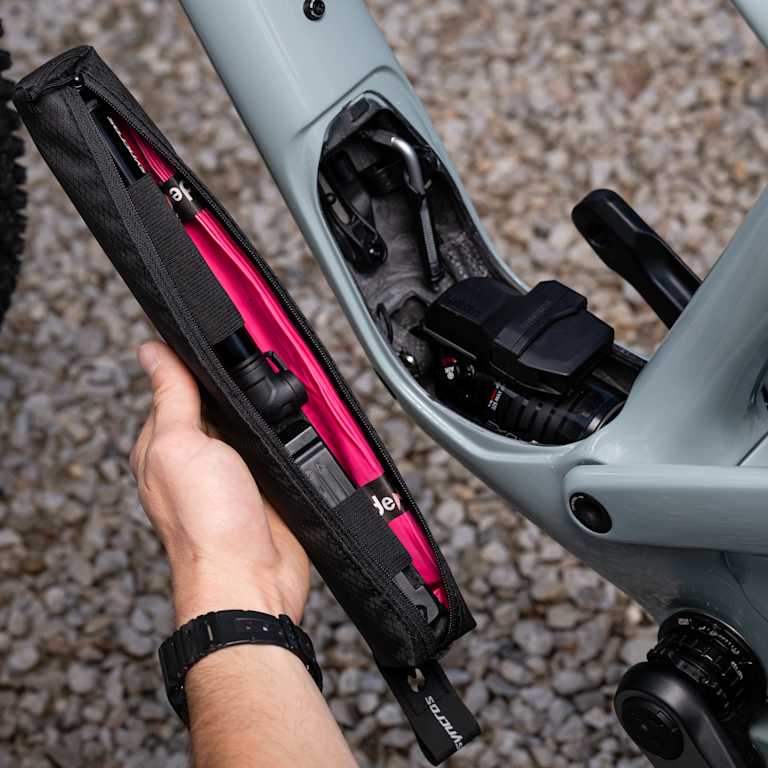
We’re big fans of Scott’s Save The Day kit—it keeps the essentials tucked neatly inside the bike, ready for when a trailside problem tries to ruin your ride.
You don’t need a tube until you really need a tube. Leaving your basic repair equipment permanently inside the bike removes one more thing to remember before heading out.
The Factory even comes with the Save the Day repair kit along with Scott’s handlebar tool and tubeless kit.
It’s a particularly appropriate feature for the Spark DC because this bike isn’t really about 60-minute race laps. Scott is pushing it toward long rides, exploring and even light bikepacking.
On a bike intended to disappear into the mountains for a few hours, carrying tools inside the frame makes more sense than saving the last few grams.
You Can Choose How Integrated You Want It
Another small feature caught our attention: Octopus Cable Technology.
Modern mountain bikes have developed a strange obsession with hiding every visible cable.
That looks fantastic.
Working on them can be another story.
Scott gives Spark DC owners both options.
Changing the head-tube badge allows the bike to use either fully integrated or more traditional cable routing.
Internal guide tubes keep the cables from rattling around inside the frame and should make replacements less frustrating.
That’s a refreshingly practical solution.
If you want the cleanest possible cockpit, hide everything.
If you work on your own bikes and would rather not dismantle half the front end to change something, don’t.
More manufacturers could take that approach.
Five Spark DC Models
The basic Spark DC concept stays intact as you move through the family, but the builds become increasingly serious.
And increasingly expensive.
Let’s start at the sensible end.
Scott Spark DC 40 – $4,399.99
The Spark DC 40 is the cheapest way into the new Spark DC family, although $4,399.99 makes “cheap” a very relative term.
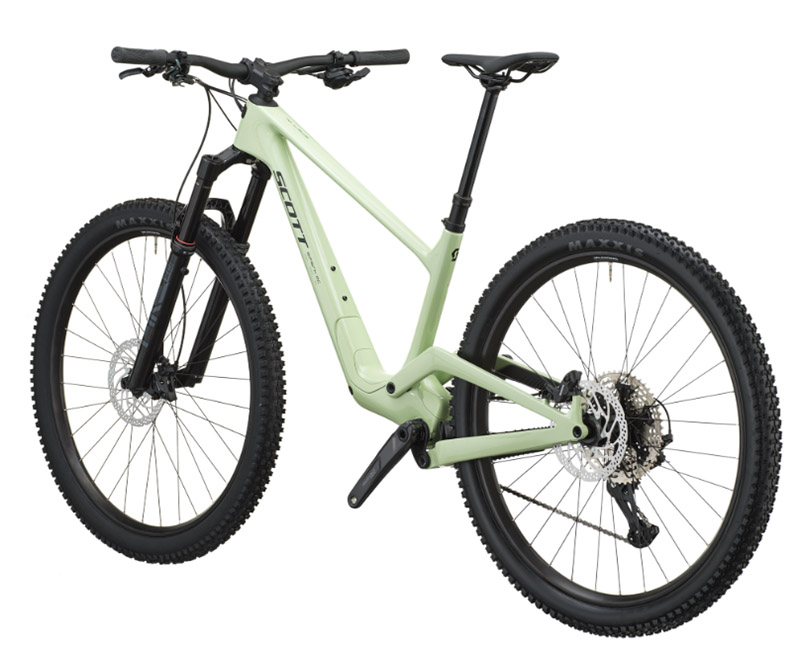
This is where we’d start if the frame and suspension concept are what attracted you to the Spark DC in the first place.
That’s an important distinction.
Components wear out. Drivetrains get replaced. Wheels get damaged or upgraded. Five years from now, your bike may have very few of the parts it left the shop with.
The frame is different.
Buying the DC 40 gets you into Scott’s new-generation Spark DC platform without paying thousands extra for top-tier drivetrain components and exotic carbon parts.
And for a lot of riders, that’s the smarter way to approach an expensive mountain bike.
The DC 40 should be particularly interesting if you’re the type who upgrades gradually. Ride the original wheels until they’re worn or damaged. Upgrade the drivetrain when replacement time comes. Change the brakes if you eventually decide you want something stronger.
You haven’t missed the fundamental reason for buying the bike.
The trade-off is obvious: weight and component quality won’t match the DC 10 or Factory. If you’re spending this much specifically because you want an exceptionally light mountain bike, moving farther up the range starts to make more sense.
But we’d rather have the cheapest version of a great platform than an expensive component group hanging from a frame we didn’t really want.
That’s what makes the DC 40 important.
It isn’t merely the model Scott created to put a lower “starting at” price on the Spark DC page.
For riders who care about the frame more than the bragging rights, it may be one of the most relevant bikes in the entire family.
Scott Spark DC 30 – $5,399.99
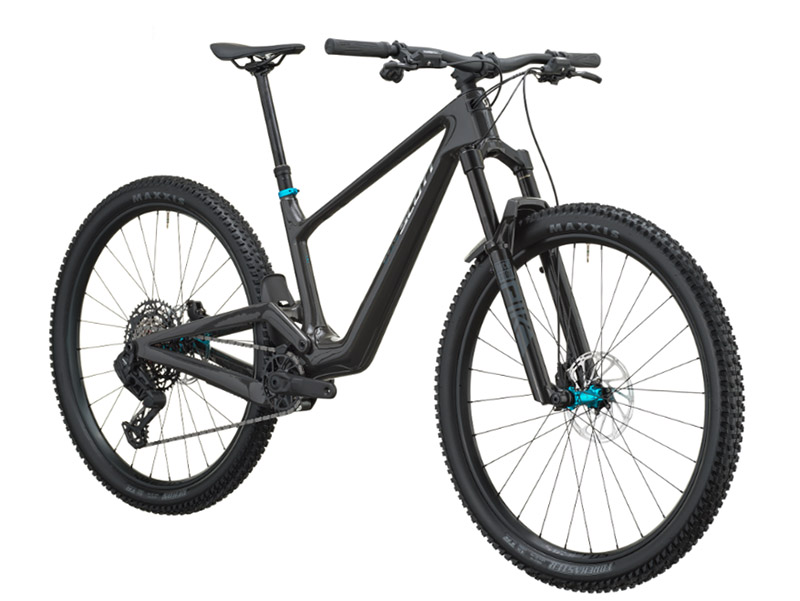
Move up one level and the price becomes $5,399.99.
The Spark DC 30 occupies an interesting position because the $1,000 jump from the DC 40 isn’t insignificant, but it also doesn’t send the bike into the crazy part of the range.
Remember, we’re eventually heading toward $13,000.
This is the point where we’d start comparing the complete component packages very carefully rather than automatically choosing the cheapest Spark DC.
The DC 30 is still aimed squarely at the rider who wants the Spark DC platform rather than a showpiece build. But that extra money should buy a more polished complete bike and potentially reduce the number of parts you’ll feel tempted to change later.
That matters.
Buying a cheaper bike with the intention of upgrading everything sounds sensible until you start pricing forks, wheelsets and drivetrains individually. Factory-installed components are almost always a cheaper way of getting them than replacing perfectly functional parts six months later.
The DC 30 therefore makes sense for someone who rides regularly and wants to buy the bike largely as-is.
It’s also where the overall Spark DC concept becomes particularly appealing.
This isn’t supposed to be a delicate XC machine that needs to be ridden carefully. Scott wants the DC to cover big distances, tackle technical trails and descend hard enough that 120mm of suspension no longer feels like quite enough.
The DC 30 lets you get into that platform while leaving several thousand dollars between your bank account and the Factory model.
That’s money for a lot of tires, trips and trail snacks.
Possibly another bike.
Scott Spark DC 20 – $7,299.99
The Spark DC 20 costs $7,299.99, placing it right in the middle of the five-bike lineup.
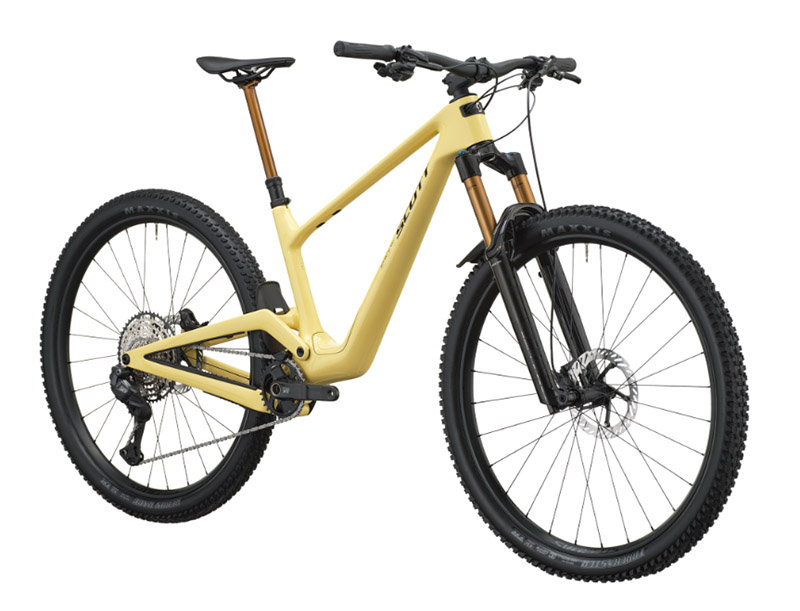
But there’s nothing particularly middle-of-the-road about a $7,300 mountain bike.
At this level, component compromises should be disappearing quickly.
This is the Spark DC for riders who don’t merely want the new frame. They also want the lighter and better equipment that helps the platform live up to its potential.
And weight matters more here than it would on a conventional trail bike.
One of the main arguments for the Spark DC is that you can have considerably more descending capability without dragging a heavy trail bike up every climb. Put unnecessarily heavy wheels, tires and components on it and you start weakening that argument.
That’s why the middle and upper builds make sense despite the steep prices.
The DC 20 should retain enough of the Spark’s light, energetic character to distinguish itself clearly from a typical 140mm trail bike while avoiding the enormous price premiums of the last two models.
This is also the point in the range we’d consider if the Spark DC were going to be our main mountain bike.
Not an XC bike plus a trail bike.
The bike.
If you’re riding three or four times a week and asking one machine to handle quick XC loops, longer weekend rides and more technical mountain trips, spending extra on suspension and rotating weight becomes easier to justify.
Not easy.
Easier.
The question is whether you’d notice enough difference over the DC 30 to justify another $1,900.
That’s where we’d spend some serious time looking at the component lists rather than the paint jobs.
Scott Spark DC 10 – $9,999.99
The Spark DC 10 costs $9,999.99.
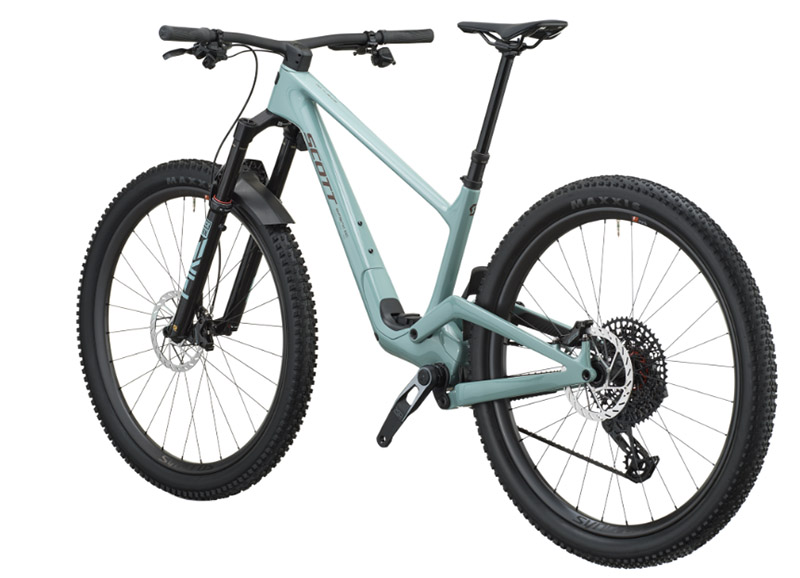
Scott apparently wanted to spare us the emotional trauma of seeing five digits on the price tag.
Thanks for the cent.
Price aside, this is where the numbers start getting seriously interesting.
Scott lists the DC 10 at approximately 27.12lb (12.3kg). That’s light for a modern full-suspension mountain bike and even more impressive once you remember how much travel the Spark DC carries.
This is really the point of the Spark DC taken close to its logical conclusion.
A normal 140mm trail bike can descend extremely well. That’s nothing new.
Making a bike with that sort of suspension travel weigh around 27lb while retaining the fast, efficient personality expected from a Spark is much harder.
That’s what you’re paying for.
The DC 10 isn’t aimed at riders trying to maximize performance per dollar. Once you’re shopping for a $10,000 mountain bike, that calculation has probably left the building.
Instead, it’s for someone who wants an extremely high-end Spark DC but doesn’t necessarily need the absolutely wild specification of the Factory.
And we’d argue that’s an important distinction.
At this level, you’re already getting most of what makes the Spark DC special: very low weight, lots of suspension and a component package that shouldn’t leave many obvious upgrade wishes.
Spending another $3,000 gets you the Factory.
That’s almost enough money to buy another good mountain bike.
The DC 10 therefore sits in an odd but appealing spot. It’s undeniably extravagant, yet somehow becomes the more rational choice when parked beside its $12,999 sibling.
Mountain-bike pricing can do funny things to your brain.
Scott Spark DC Factory – $12,999.99
Then there’s the Spark DC Factory.
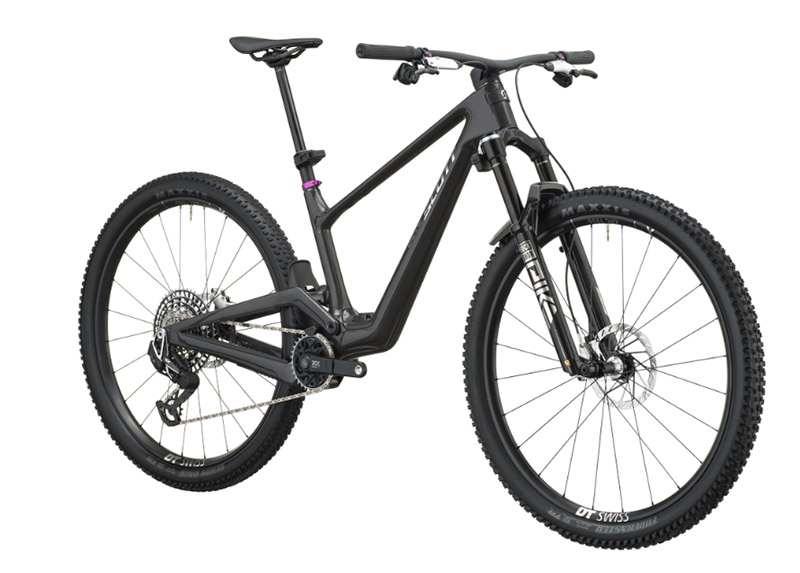
This is the bike that explains what Scott was really trying to achieve with the new platform.
It costs $12,999.99, weighs a claimed 25.35lb (11.5kg) tubeless and uses an HMX carbon frame.
Twenty-five pounds.
With a 140mm RockShox Pike Ultimate Flight Attendant fork and 138mm of rear travel from a SIDLuxe XL Ultimate Flight Attendant shock.
That’s the number we’d keep coming back to.
Scott could have built a lightweight 120mm bike and nobody would have been particularly surprised. It already knows how to do that.
Instead, the Factory tries to deliver trail-bike suspension without trail-bike heft.
The parts list is exactly as ridiculous as the price suggests.
SRAM’s XX SL Eagle AXS Transmission handles shifting and the carbon crank includes a spindle power meter. SRAM Motive Ultimate four-piston brakes use 180mm rotors front and rear.
There’s a wireless RockShox Reverb AXS dropper and DT Swiss XRC 1200 Spline carbon wheels with 30mm internal rims. Tires are 29×2.4in Maxxis Forekasters at the front and Rekons at the rear.
Even the cockpit gets the carbon treatment with a 760mm Syncros HMF carbon integrated bar and stem.
And then there’s Flight Attendant.
Instead of requiring the rider to constantly decide when the suspension should be open, firm or locked, RockShox’s electronic system responds automatically to the rider and terrain. On a bike that’s supposed to switch rapidly between efficient climbing and aggressive descending, this technology makes more sense than it does on many other bikes.
The Factory also gets CeramicSpeed bearings and comes with Scott’s Save the Day repair kit and handlebar tool/tubeless kit.
Is all of that worth $12,999.99?
That’s going to depend heavily on how much $13,000 means to you.
From a purely practical perspective, the cheaper Spark DC models give you the important part: the platform.
The Factory exists for a different reason.
It’s Scott showing just how light and sophisticated a nearly 140mm bike can become when price stops being the first consideration.
And 25.35lb makes a pretty convincing demonstration.
What Makes the Spark DC Different?
The Spark DC isn’t particularly interesting because Scott offers five component levels.
Most major bike families do that.
It’s interesting because Scott has moved the definition of a lightweight mountain bike farther toward the trail category.
A 140mm fork used to tell you almost immediately what kind of bike you were looking
Share this on: