Riding the Tuscany Trail: The Good, the Bad and the Unexpected
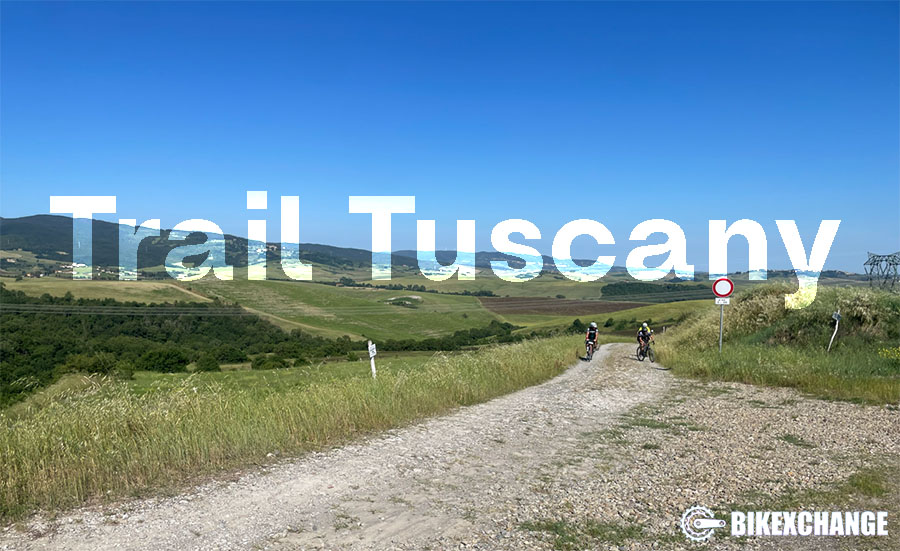
Tuscany is famous for its vineyards, medieval villages, winding roads and beautiful countryside. It’s the kind of place that looks perfect for a cycling holiday.
But what happens when you try to explore it on a loaded gravel bike, covering 500 km in five days?
I found out during the 2026 Tuscany Trail, an event that brought around 6,000 cyclists to this part of Italy.
The experience was a mixture of fantastic riding, unexpected challenges, equipment failures and some questionable camping facilities.
Would I recommend it? Absolutely.
Would I approach it differently if I went back? Definitely.
Here’s what the experience taught me.
A Cycling Holiday? Not Exactly
Before arriving in Tuscany, I had a fairly romantic picture of the event.
I expected leisurely cycling, long coffee breaks, relaxed lunches and riders stopping to enjoy a glass of wine along the way.
There was some of that, of course.
But what surprised me was how seriously many participants approached the riding itself.
The pace was often higher than expected, and the terrain made even relatively short distances demanding.
Tuscany is full of hills, and many of its most beautiful villages are located at the top of them.
That creates a predictable pattern.
You see a beautiful medieval village in the distance. You admire it for a moment. Then you realize that the road is heading straight toward it.
And up you go.
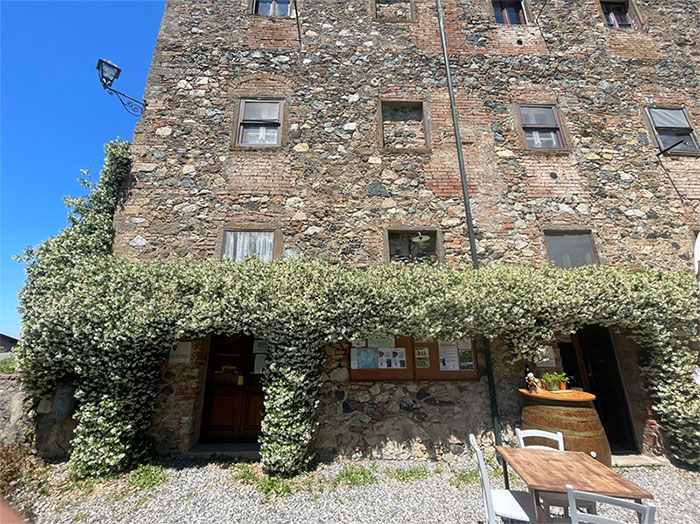
One of thousands of stunning buildings you can enjoy
Some of the gradients were incredibly steep, particularly with bikepacking luggage.
Fortunately, reaching the top usually came with a reward: beautiful views across the surrounding countryside and a descent on the other side.
On paved roads, speeds of 60 km/h (37 mph) were entirely possible.
The gravel sections required more caution.
Complete Gravel Guide (Before Hitting Gravel Roads)
Dry conditions and thousands of bicycle tires also created enormous amounts of dust. At times, riding behind other cyclists felt like cycling through fog.
It wasn’t quite the gentle Italian holiday I’d imagined.
But it was certainly memorable.
What Five Days of Bikepacking Equipment Looked Like
My setup wasn’t particularly complicated.
I wanted enough equipment to sleep at the designated basecamps, handle minor mechanical problems and carry food and water between stops.
Most of my belongings went into a large saddle bag.
I also had a small top tube bag for valuables, including my phone and money, plus a larger frame bag for snacks, tools and spare parts.
For hydration, I carried a backpack with a 4-liter water capacity.
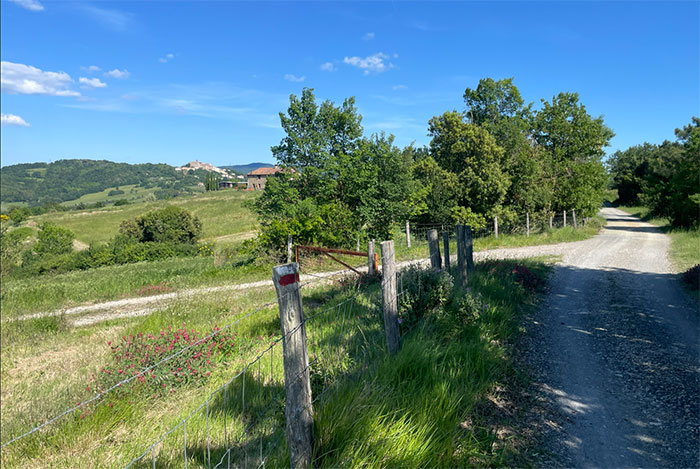
Views of Tuscany
My sleeping equipment consisted of a tarp, supporting poles, nylon cord and a sleeping bag.
The sleeping bag turned out to be too small for me, which wasn’t exactly ideal after long days of cycling.
And then there was my camping chair.
Yes, I carried a chair on a gravel bike.
Was it essential? Probably not.
Did I appreciate having somewhere comfortable to sit at the end of the day? Absolutely.
Looking back, I wouldn’t necessarily reduce the amount of equipment dramatically. I’d simply reconsider how it was packed.
The rear-heavy setup was one thing I’d definitely change.
When Your Equipment Decides to Quit
You can prepare your bicycle carefully and still encounter problems.
We had two particularly memorable equipment failures during the trip.
The first involved a broken shifting cable.
It happened far from anywhere convenient, leaving us wondering how quickly we could get moving again.
What followed was a pleasant surprise.
Other participants kept stopping to offer assistance.
People were willing to help, lend tools and see whether they had anything useful in their bags.
Unfortunately, nobody had the cable we needed.
Then we discovered that a Decathlon store was only 4 km (2.5 miles) away.
That was an incredibly lucky coincidence.
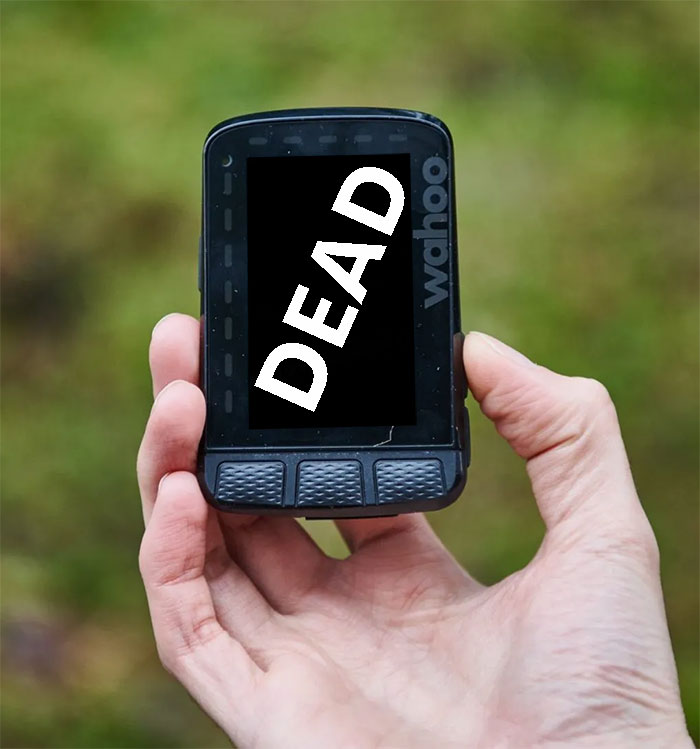
Hot sun + black GPS = Dead device
We managed to get the problem sorted and returned to the route.
The second failure was less convenient.
Two of our GPS stopped working after being exposed to the hot Tuscan sun.
It didn’t restart. It didn’t recover later.
It was simply dead.
For an event where navigation plays such an important role, losing your GPS is a serious inconvenience.
There are countless intersections and small rural roads where choosing the correct direction isn’t obvious.
Fortunately, a phone can provide an alternative.
For anyone preparing for the Tuscany Trail, I’d recommend carrying an offline copy of the route on a second device.
A power bank is also useful, especially when navigation and photography are draining your phone battery.
The small spare parts that matter
After this experience, my essential repair kit would include spare shifting cables, a derailleur hanger, brake pads and basic tools.
I broke my derailleur hanger during the epilogue, which reinforced that lesson.
The brake pads also deserve attention.
Tuscany’s long descents put them to work repeatedly, and I had to adjust my brakes several times during the trip.
I didn’t need to replace the pads, but carrying an extra set would have been sensible.
Discovering Tuscany Beyond the GPS Route
Some of my favorite moments had nothing to do with cycling performance.
They happened when we stopped riding.
The Tuscany Trail passes through numerous small communities, and many have cafés, bars and shops that are easy to overlook.
We noticed that riders tended to gather at the same locations.
A shop appearing on the official map could have a long queue outside, while another business a short distance away might be almost empty.
In some cases, it seemed that the owners of these smaller businesses weren’t even aware that thousands of cyclists were passing through the area.
We found several excellent places by looking beyond the obvious stops.
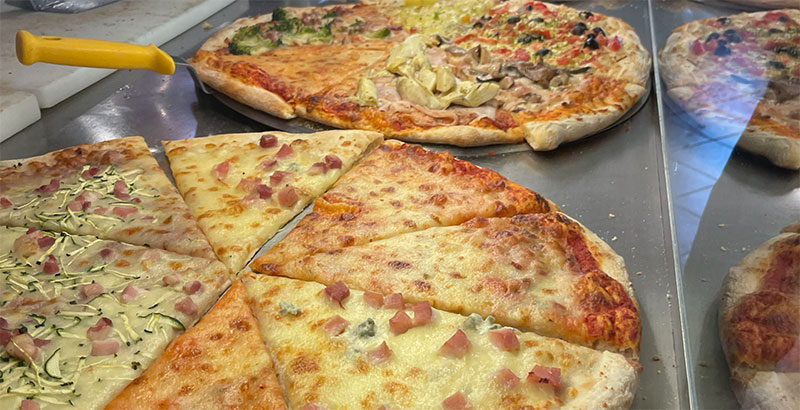
Wouldn’t you enjoy this after a long day of pedaling?
One bar, hidden behind a hedge about 5 km from a crowded location, became a particular favorite.
It had excellent beer, friendly service and no queue.
Other stops were equally enjoyable, whether we were buying coffee and croissants or looking for something more substantial.
These places offered a glimpse of everyday life in Tuscany.
Rather than spending every break surrounded by other event participants, we could sit somewhere quiet and enjoy the atmosphere.
For me, that was one of the biggest attractions of the trip.
An opportunity for local communities
I think the event organizers could make better use of the businesses along the route.
With approximately 6,000 cyclists taking part, even a small percentage stopping at an additional café or shop could be valuable to local owners.
Simple signs pointing toward nearby services would help.
Better communication between organizers and local businesses could also spread visitors more evenly.
It seems unnecessary for one café to have a huge queue while another excellent place nearby receives almost no attention.
Of course, part of the enjoyment is discovering these places independently.
But knowing that a shop or bar exists doesn’t take away the adventure.
It simply gives riders more options.
Sleeping Arrangements: Adventure Has Its Limits
We spent three nights at basecamps and two nights in B&B accommodation.
The basecamps were certainly part of the experience, but their quality varied.
One thing became obvious: with thousands of participants, camping areas could fill up quickly.
And when they were full, they were really full.
Finding a suitable place to sleep wasn’t always straightforward.
The washing facilities were another issue.
At one basecamp, there were only two improvised showers, with people queuing while others washed in cold water.
Privacy was almost nonexistent.
The showers stood on wooden pallets surrounded by mud.
At another location, the route between the water supply and the shower crossed several meters of muddy ground.
Nobody expects luxury bathrooms at a bikepacking event.
However, shower curtains, better walkways and a little more attention to the layout would have improved the situation considerably.
These are relatively simple changes.
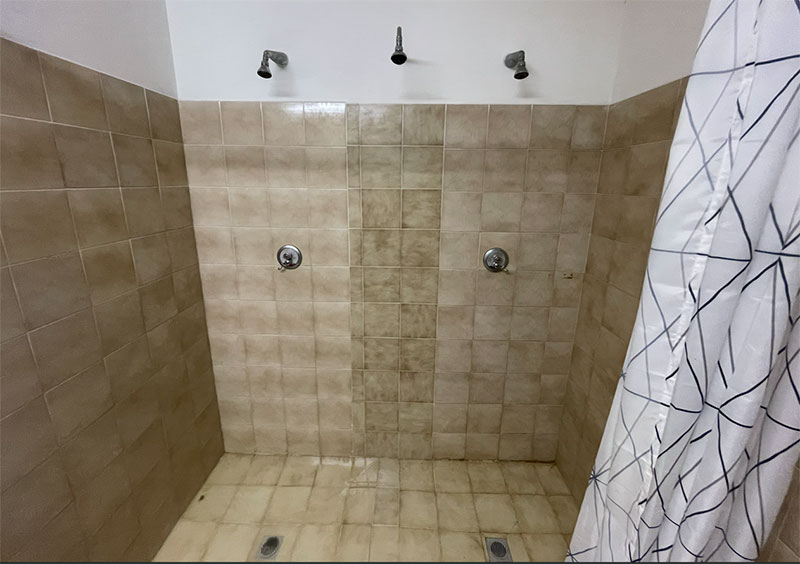
What’s wrong with this picture? (It was one of the best showers!)
I also found it surprising that one basecamp closed their indoor door at night!
Our preferred routine was to ride, spend time talking about the day and then continue after a short sleep.
The restrictions made that more difficult.
An event focused on independent travel would benefit from allowing participants a little more freedom.
There was also a rather unusual farmer’s toilet that other riders mentioned.
Unfortunately, I learned about it too late to try it myself.
Apparently, I missed an interesting invention!
What I’d Do Differently on Another Long Gravel Ride
The Tuscany Trail gave me a better understanding of what matters when spending several consecutive days on a loaded bicycle.
Some lessons were obvious only after experiencing them.
I would still choose a bike I already knew rather than buying something new specifically for the event.
I’d also invest in dependable gravel tires, but distribute my luggage more carefully to avoid concentrating so much weight at the rear.
My repair kit would contain a few additional small parts, particularly cables and a derailleur hanger.
And I would never depend on a single GPS device again.
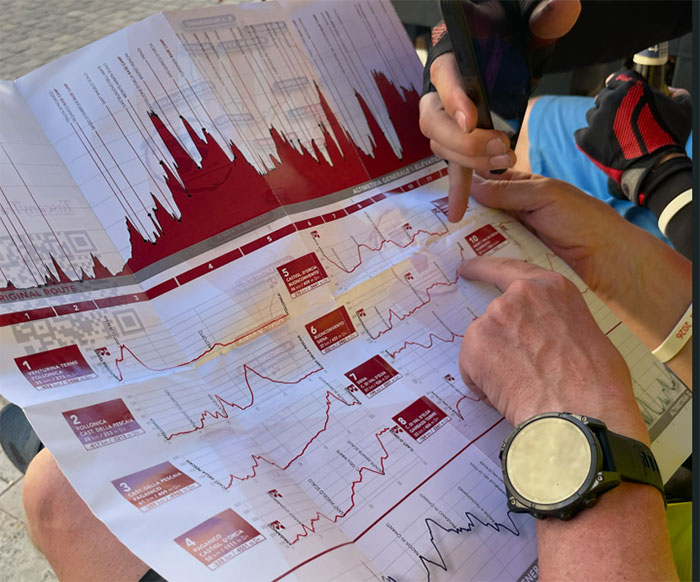
Elevation was the real challenge!
For accommodation, I’d pay closer attention to when basecamps were likely to become crowded.
I’d also spend more time looking for independent restaurants and cafés rather than relying entirely on places marked along the official route.
One thing I probably wouldn’t change is the camping chair.
Sometimes a little comfort is worth carrying a few extra grams.
Would I Return to the Tuscany Trail?
The Tuscany Trail delivered exactly the kind of memories that make cycling adventures worthwhile.
There were difficult climbs, dusty roads, unexpected repairs and facilities that could have been better.
But there were also beautiful villages, wonderful views, friendly people and memorable stops at small local businesses.
It was an excellent way to experience Tuscany.
Even now, I sometimes find myself thinking about the landscapes we rode through. Occasionally, they even appear in my dreams.
So would I recommend the event to someone considering their first Tuscany Trail?
Without hesitation.
Would I personally sign up again?
Probably not.
There are simply too many other places I’d like to explore on two wheels.
And that’s not a criticism of the Tuscany Trail.
It’s a sign that the experience reminded me how much of the world there is left to discover by bicycle.
Share this on: